
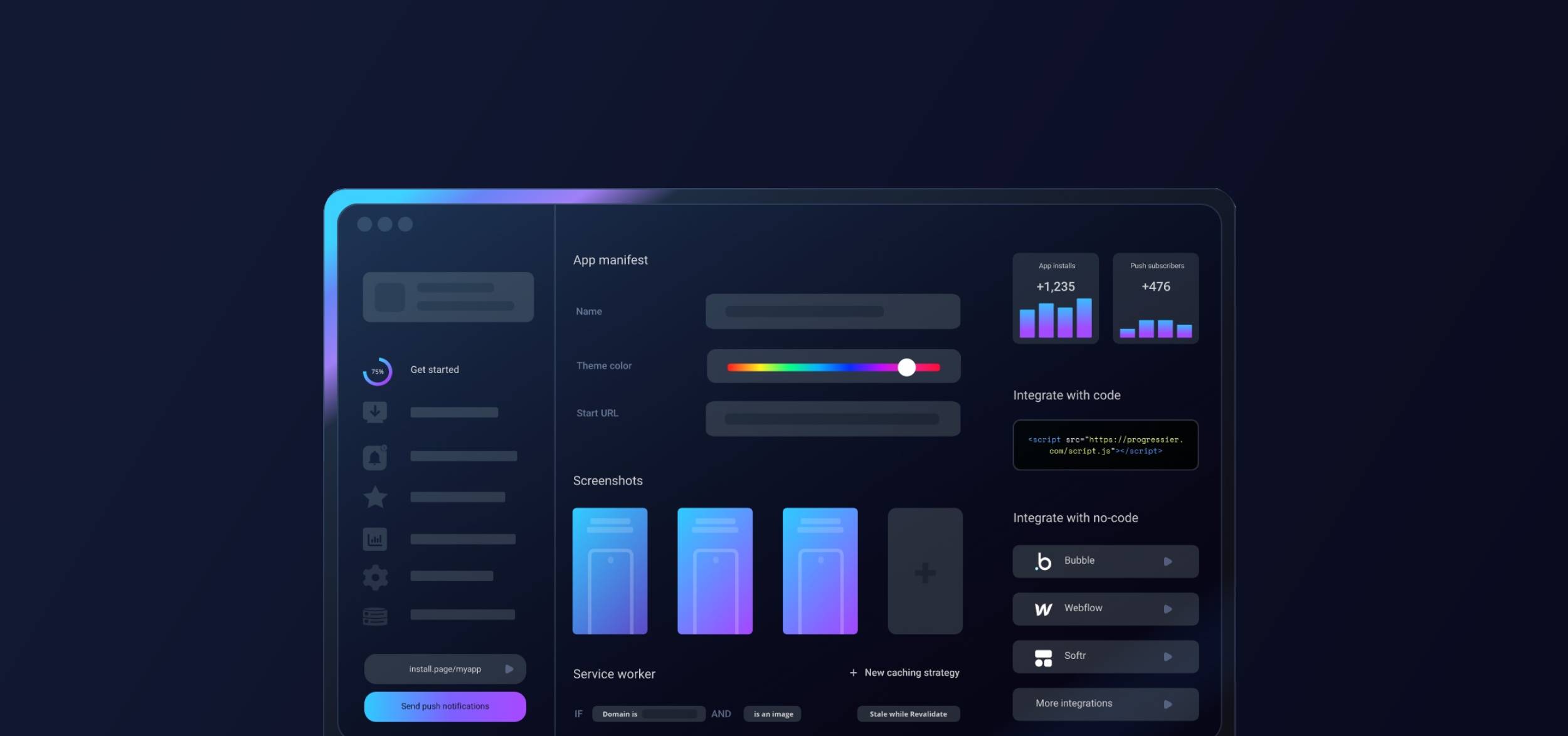
Step 1: Complete your Shopify project
Progressier allows augmenting your Shopify web app with additional functionality, including push notifications and PWA installation. You can add Progressier to your project once it's ready to go and your app is available at a custom domain.
Step 2: Create a new Progressier account
Progressier is a no-code tool that lets you quickly add new features to Shopify web apps without any programming. It typically takes just a few minutes to set up Progressier with a Shopify app.
Create your Progressier account . Progressier comes with a 14-day free trial that allows you to integrate it into your Shopify app risk-free. You only enter your payment information once everything is working to your liking.
Step 3: Generate your Shopify PWA
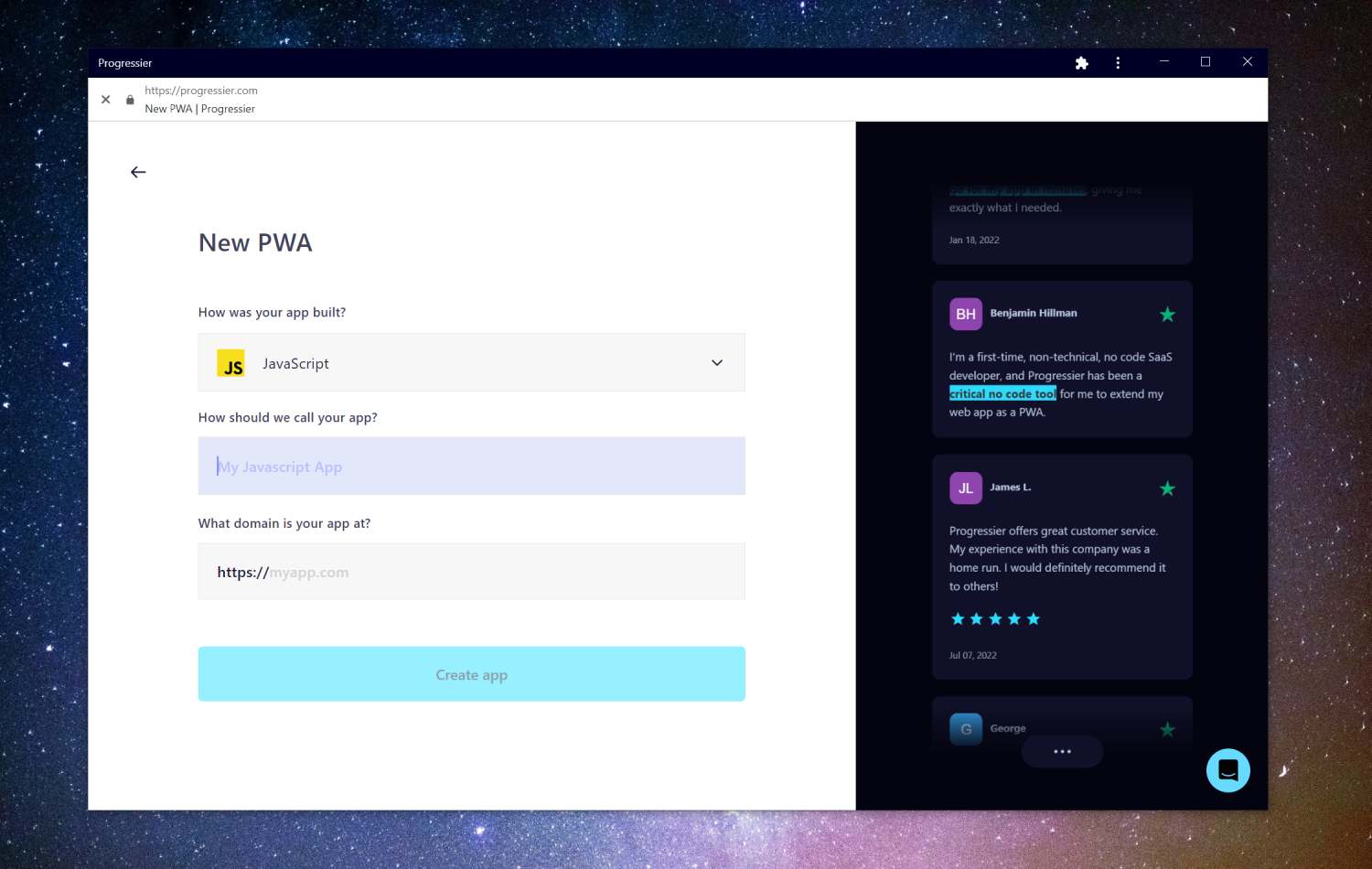
Progressier will turn your Shopify project into a PWA. Enter your app's name, tell us how it was built (you might want to choose Shopify when prompted) and copy-paste your app's URL in the Domain field.
Step 4: Finish configuring your Shopify PWA
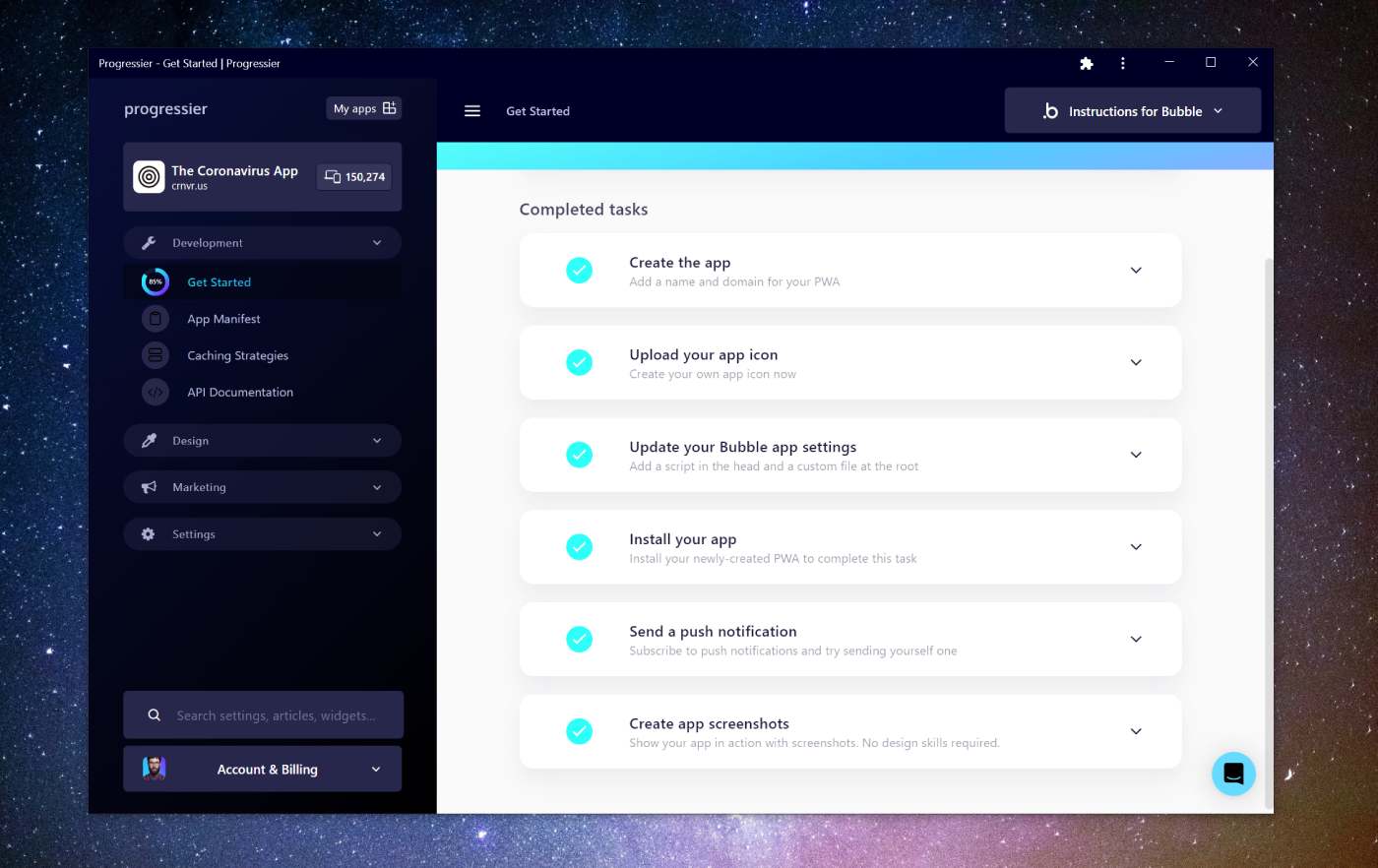
We'll show you a series of tasks. These tasks are easy and shouldn't take you more than a few minutes to complete. If you run any bottlenecks, reach out to us using the Intercom widget at the bottom-right corner of the page.
Step 5: Allow push notifications

Now back to your newly-created PWA! You should have been prompted to allow notifications during sign-up.
Step 6: Test push notifications with Shopify
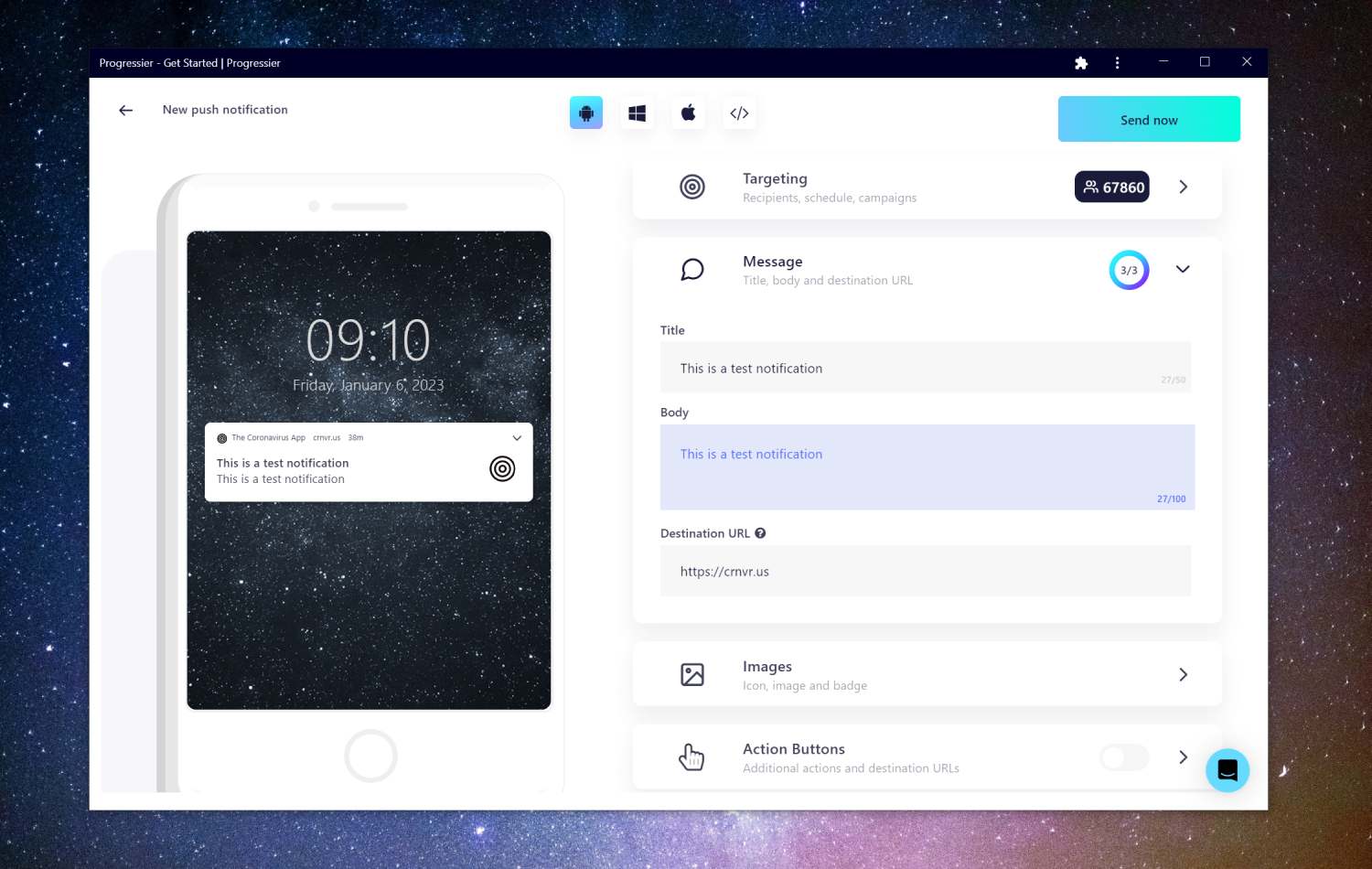
Go to our Push Composer (login required) to compose your first push notification. By default, it will be sent to all your subscribers, but you can target a specific group of users in the Recipients section of the Targeting tab.
Step 7: Use our Push API (optional)
Sending the same notification to every user for marketing purposes is one thing. Sending notifications programmatically to a user to react to events in your Shopify app is another. Luckily, Progressier comes with a solution for both use cases. Simply connect your user data (e.g. a user ID or user email), then call our Push API in your server-side code to send a push notification to a specific user. You don't have to manage push subscriptions on your end.
How can push notifications enhance your Shopify app
Push notifications allow you to send timely and relevant information to users, even when they are not actively using the app. They can also help to increase user retention by keeping users engaged with the app. And last but not least, they can be used to drive traffic to specific parts of the app or to promote certain features.
What are the cons of push notifications in web apps?
Because of their limited deliverability, push notifications are not as flexible as email or even text messages as a communication tool. Also, it's easy for users to unsubscribe from your notifications, so you'll have to make sure you don't notify them too frequently.
What are the best push services for Shopify apps?
Here are some popular examples of push services Shopify app owners like to use:
- Firebase Cloud Messaging (FCM): This is a free, cross-platform messaging service provided by Google that allows you to send push notifications to Android, iOS, and web devices.
- OneSignal: OneSignal is a cross-platform push notification service that enables developers to send targeted messages to their users. You can compare it with Progressier here.
- Progressier: Progressier is a PWA toolkit that allows developers and no-code makers to effortlessly send push notifications for marketing or targeted messaging purposes. It is built specifically for web apps and may not be the best option for websites or native apps.
Building your own integration with the Web Push API
It's not really possible to build a functional push service with Shopify as it requires capabilities beyond those provided by no-code platforms.
Which devices and browsers support push notifications?
You can send push notifications to users on most browsers, including Chrome (Windows, Android, macOS), Firefox (Windows, Android, macOS), Edge (Windows, Android, macOS) and Safari (iOS, macOs).